

Best Link Prospecting Tools in 2026: 10 Scored, 3 Qualify

by Rachid Idali
Last Updated: September 13, 2026
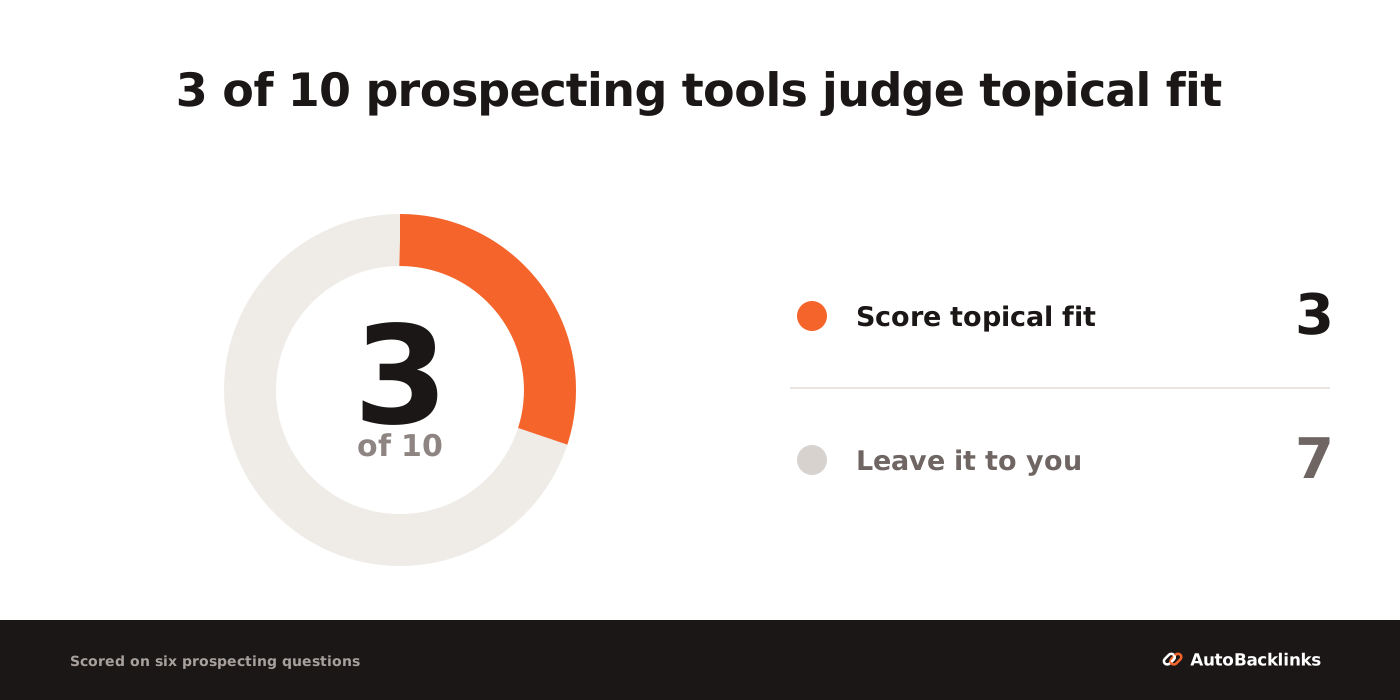
A link prospecting tool finds pages worth pitching and tells you which of them are worth your time. Ten products sell themselves for that job. Three of them judge whether a prospect fits your site before you read the list. The rest find pages and leave the judging to you.
A list you still have to read one row at a time is not a shortcut. It is homework with a subscription attached, and it is what most of this category sells.
So I wrote down the six questions a prospecting tool has to answer, scored all ten, and then did the arithmetic nobody does: what one prospecting search actually costs.
What link prospecting is, and where most prospecting tools stop
Link prospecting is the stage between picking a target page and sending an email. You find candidate sites, decide which ones are worth pitching, and get a contact for the ones that are.
Three steps. Most tools do the first one well and describe the second one vaguely.
The vague part matters because the second step is where the money is. On the campaign I keep coming back to, I sent 187 emails and got 32 replies, a 17.1 percent reply rate, with 155 opens and 6 bounces. The copy was ordinary. The prospect list was not.
That is the whole argument for judging these tools on qualification rather than on index size. A database of twelve million sites is a worse starting point than a list of forty that fit, if you are the one reading all twelve million.
The six questions a link prospecting tool has to answer
Six questions, each scored 1 if the product does it, 0.5 if it half does it or you have to build it, 0 if it does not.
- Sources. Where do prospects come from: live search results, a competitor's backlinks, an index, listicles, your own import?
- Relevance scoring. Does it score topical fit per prospect, automatically, before you read the row?
- SEO filters. Can you cut the list on Domain Rating, organic traffic or referring domains before you pitch?
- Contacts. Does it find and verify the email itself?
- Dedupe. Does it know who you already contacted, and skip them?
- Export. Can you take the list out?
Nine of the ten rows are scored from what each vendor publishes on its own live pages. The tenth is ours, and I scored it from our source code, which is a different standard of evidence and the reason it is the only row I can defend line by line.
Question five is the one buyers skip, and only three of the ten answer it. Pitching a site you pitched two months ago is worse than not pitching it, because the editor remembers.
It is also the question with the most detailed answer on our own side. When prospects merge into a campaign, AutoBacklinks names eight reasons a prospect gets dropped before it reaches anyone:
- already contacted from another campaign
- active in another campaign
- already linking to your site
- no verified email
- below the SEO filter
- not relevant
- no contact found
- already on this campaign
The third one is the mistake every spreadsheet makes. You do not need to ask for a link from a site that already gave you one.
Question six turned out to be a floor rather than a difference. All ten export, so the column separates nothing. I scored it anyway, because a prospecting tool that trapped your list would be disqualifying, and it is worth confirming that none of these does.
A last limit on the score, stated plainly: this measures coverage, not quality. A tool can score relevance and score it badly. It is a map of what each product attempts, not a promise that it succeeds.
The 10 link prospecting tools, scored
| Tool | Sources | Relevance | SEO filter | Contacts | Dedupe | Export | Score |
|---|---|---|---|---|---|---|---|
| AutoBacklinks | 1 | 1 | 1 | 1 | 1 | 1 | 6.0 |
| Linkee | 1 | 1 | 1 | 1 | 1 | 1 | 6.0 |
| ListBrew | 0.5 | 1 | 1 | 1 | 0.5 | 1 | 5.0 |
| Pitchbox | 1 | 0.5 | 0.5 | 1 | 1 | 1 | 5.0 |
| AI Backlink Builder (Respona) | 1 | 0.5 | 0.5 | 1 | 0.5 | 1 | 4.5 |
| BuzzStream | 1 | 0 | 0.5 | 1 | 0.5 | 1 | 4.0 |
| LinkResearchTools | 1 | 0.5 | 1 | 0 | 0 | 1 | 3.5 |
| Ahrefs | 1 | 0 | 1 | 0 | 0 | 1 | 3.0 |
| Hunter | 0 | 0 | 0 | 1 | 0.5 | 1 | 2.5 |
| BacklinkCRM | 0 | 0 | 0 | 0 | 0.5 | 1 | 1.5 |
Two tools score 6 of 6, and one of them is ours, which is worth saying out loud rather than arranging around. Linkee matches us question for question here. Where we differ is in where the prospects come from and how the product is bought, not in coverage.
Now the cells a customer would argue with, in the open.
Only three tools take a full point on relevance: AutoBacklinks, Linkee and ListBrew. Three more take half for judging a prospect on something other than topical fit, or for making you build the judgement. LinkResearchTools simulates risk rather than fit. Pitchbox ships AI fields you can point at an opportunity URL, which is a prompt you author rather than a score that arrives with the product. BuzzStream takes 0, because publisher and influencer metrics are not a fit judgement: a Domain Rating does not tell you the site writes about your subject.
Dedupe is scored on a published feature or nothing. Pitchbox lists Auto Deduplication on every tier and Linkee offers to "eliminate websites that you previously outreached", so both take the point. BuzzStream, Hunter, ListBrew and BacklinkCRM each take half for something adjacent: a contact history, a sequence that stops on reply, an exclusion of pages that already mention you, a record of links you already hold. None of those is the same as refusing to pitch a domain twice.
What a prospecting search costs at BuzzStream and Pitchbox
BuzzStream and Pitchbox both meter the same unit, a prospecting search, and both publish the allowance per tier. That makes them the only two tools here you can compare on price at an identical basis, so I divided one by the other.
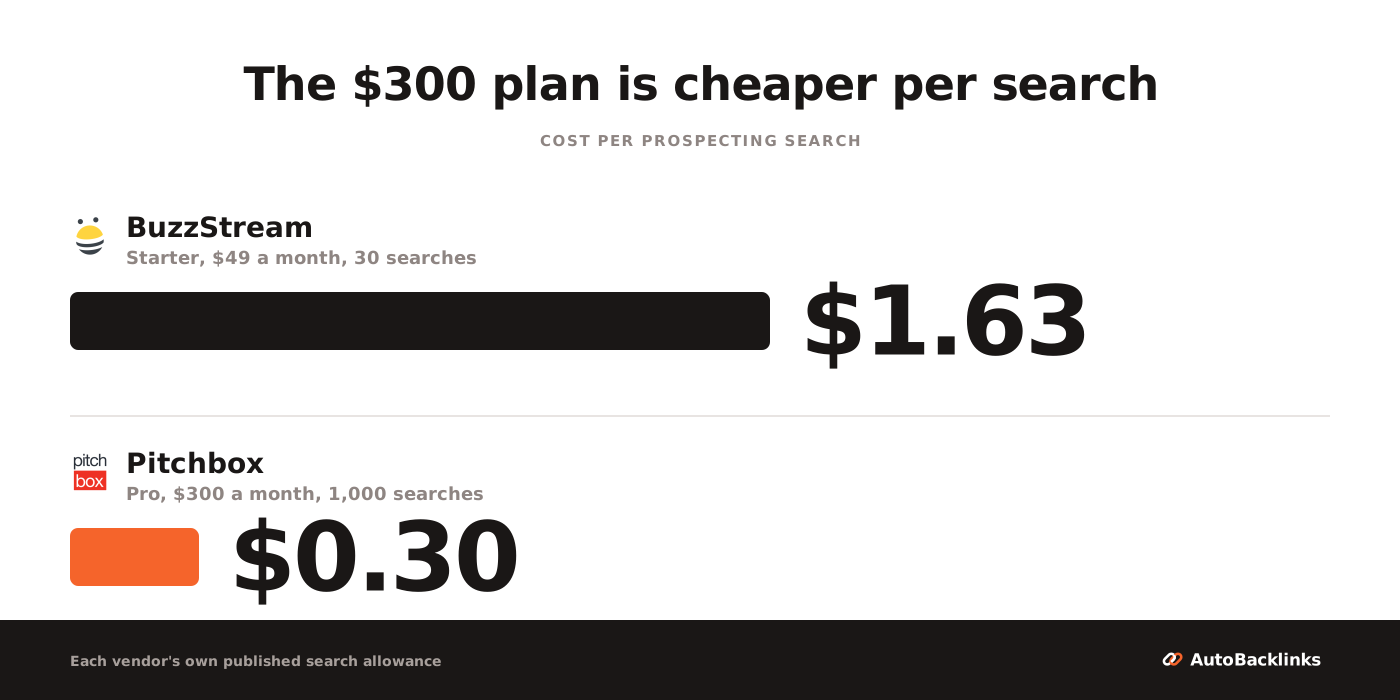
- BuzzStream Starter: $49 for 30 searches, $1.63 a search
- BuzzStream Growth: $174 for 250 searches, $0.70 a search
- BuzzStream Professional: $424 for 1,000 searches, $0.42 a search
- Pitchbox Pro: $300 for 1,000 searches, $0.30 a search
- Pitchbox Advanced: $600 for 5,000 searches, $0.12 a search
- Pitchbox Scale: $1,200 for unlimited searches, unmetered
The $300 plan costs roughly a fifth of the $49 plan per search. That is not a trick of the arithmetic, it is what the entry tier is for: BuzzStream Starter is a single-seat outreach CRM with 30 searches attached, not a prospecting plan.
One thing the per-search number hides, and it matters before you act on it. BuzzStream says plans are monthly with no minimum term. Pitchbox says the opposite, in its own words:
Please note, all plans require a commitment of one year, regardless of billing frequency.
So the cheaper search comes with twelve months attached, which puts the real Pitchbox floor at $3,600 rather than $300.
Our own metered unit belongs in the same arithmetic, since the point is the method rather than the scoreboard. A prospect that gets discovered, enriched with SEO metrics, given a verified email and a written pitch costs 1 plus 1 plus 3 plus 1 credits, so 6 in total. On the $79 plan's 2,500 credits that is about 19 cents for a qualified, contactable prospect.
Link prospecting tools that qualify prospects, not just find them
Three products decide something about a prospect's fit before you see it.
AutoBacklinks
Ours, so treat every line below as a spec you can check rather than a verdict you should trust. The numbers come out of the repository, not the marketing site.
Prospects arrive from five sources: web search, competitor backlinks, ChatGPT sources, an existing list, and CSV import. That covers guest posts, link insertions, resource pages, listicles and directories in one campaign rather than one tool per prospect type.
Relevance runs in two passes. A cheap first pass scores every result from 0 to 100 and treats 50 or above as promising and under 30 as low signal, so the expensive enrichment only runs on what survives. The SEO filter then cuts on minimum Domain Rating (20 by default) and minimum organic traffic (500 by default).
Dedupe is the part I would actually switch tools for. The eight drop reasons above run at merge time with counts, and already-contacted or active domains can be included anyway by an explicit override. Scheduled runs skip sites already in outreach, so the same pipeline can run every week without pitching anyone twice.
Plans are $79, $179 and $399 a month on 2,500, 7,500 and 20,000 credits, month to month. The trial is 7 days and 120 credits, with a card.
What you cannot do at this price: use it as your SEO platform. There is no rank tracking, no site audit and no keyword dashboard, because we consume Domain Rating and traffic figures to filter prospects rather than produce them, so your Ahrefs or Semrush subscription stays. It does not write the guest post either, only the email asking for it.
Linkee
Linkee is the other 6 of 6, and it is honest about the human step at the end. Its own description of the vetting pass:
Linkee will scan through your list, vetting each prospect for relevancy and quality.
It removes PBNs, broken links and non-secure sites, groups sites into categories and niches, and finds verified emails with names and positions. It also dedupes: its own wording is to "eliminate websites that you previously outreached", which is the question most of this category ignores.
You can start from its own website database or import a raw list out of Ahrefs or Semrush, which is a genuinely useful door for anyone with a spreadsheet already. There is also a Manual Clean-Up step, where you scan the curated prospects and approve them. That is the right design, and it is worth noticing that the tool with the strongest automated vetting is also the one that builds in a human pass.
Plans are $97, $197 and $358 a month, dropping to $80.83, $164.17 and $298.33 if you prepay for a year. The pricing page opens on the annual view, so the lower set is the one you see first.
One thing to check before you buy on database size: Linkee's own pages describe that database as 5 million websites in one place and 12 million in another. Ask which number is current, because it is the headline reason to pick a database tool over a live-search tool.
What you cannot do at this price: prospect from a live search result. The database and your imports are the sources, which is a different starting point from a tool that goes and looks.
ListBrew
ListBrew does one prospect type and does it thoroughly. It finds listicles where your competitors are featured and you are not, which is a narrow enough job that it can afford to qualify every result.
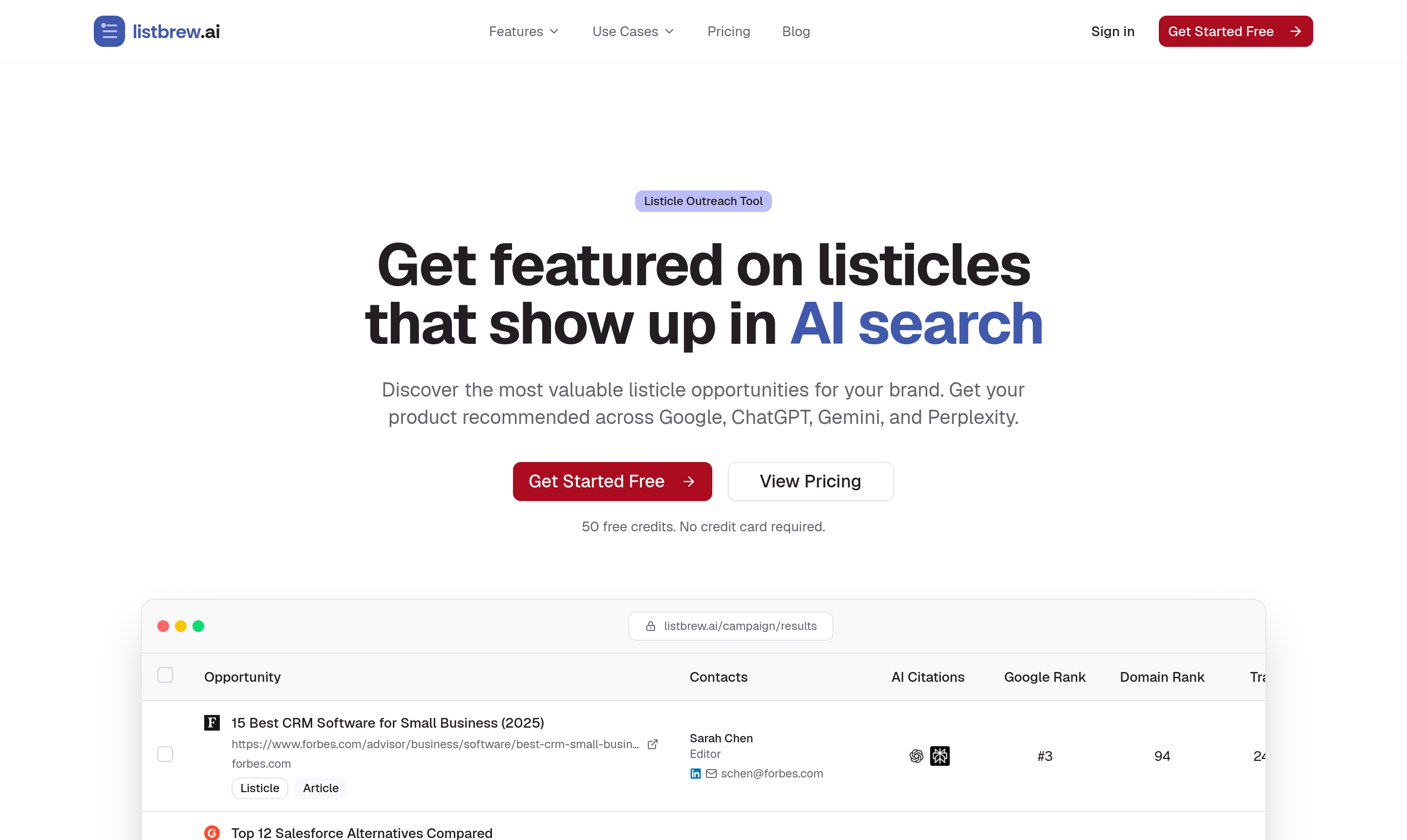
Each opportunity shows the Google ranking position, the domain rank, traffic, and which AI engines cite that page. You can filter on domain authority, traffic and relevance, and it hides pages that already mention your brand, which is a form of dedupe pointed at coverage rather than contacts.
Contact data comes from Hunter.io and Apollo rather than its own index, and it starts on the $99 tier rather than the entry plan. The outreach side, its AI pitch writer and email sending, is marked as coming rather than shipped, so today this finds and qualifies and you send from somewhere else.
Pricing is $49 a month for 100 credits, $99 for 300 and $199 for 700. There is a free entry point of 50 one-time credits, which is a tester rather than a plan: one-time credits do not refill, so it sizes a trial, not a month.
What you cannot do at this price: run guest post or resource page prospecting, or send from inside the tool yet. If listicle placements are not your play, this is the wrong tool rather than a cheap one.
Link prospecting tools that source the list and hand it over
Four products find prospects at scale and leave most of the judgement to you.
Pitchbox
Pitchbox is the most capable sourcing engine here and the most expensive way to buy one. Plans are $300, $600 and $1,200 a month, or $210, $420 and $825 billed annually, for 1,000, 5,000 and unlimited prospecting searches.
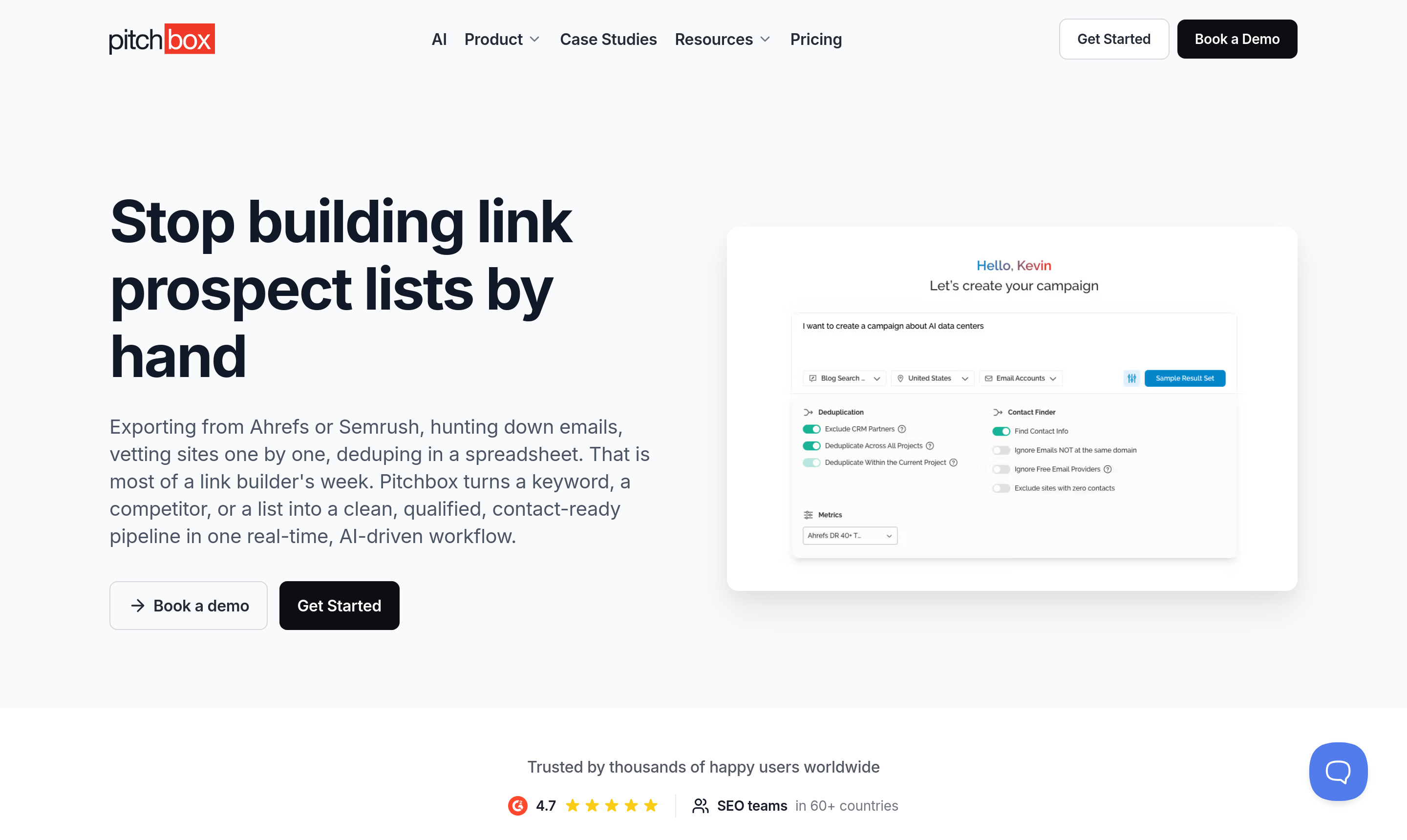
Two details do not appear on the pricing card and change the maths. Expert-led implementation is $2,000, $3,000 or $4,000 by tier, included if you prepay annually. And the commitment is a year either way, which is the line quoted above.
Data credits meter the rest: 600,000 a year on Pro and unlimited above, billed at 1 credit per prospect website and 2 credits per verified email. Auto deduplication and an SEO metrics filter are included on every tier, which is why it scores full marks on dedupe.
The half point on SEO filters is about whose data it is. Moz metrics are on by default and switch off when you connect another integration, so a Domain Rating filter means bringing your own Ahrefs account. Its AI personalization runs on your own OpenAI or Anthropic key, and Pitchbox is explicit that those costs are borne by the user.
What you cannot do at this price: get a relevance judgement out of the box. The AI fields can qualify an opportunity, but you write the prompt, so you are buying volume, a strong CRM and deliverability, and staffing the thinking.
BuzzStream
BuzzStream is the outreach CRM most link builders learned on, and the prospecting side is the smaller half of it. Plans are $49, $174 and $424 a month, with custom pricing from $999, and no minimum term.
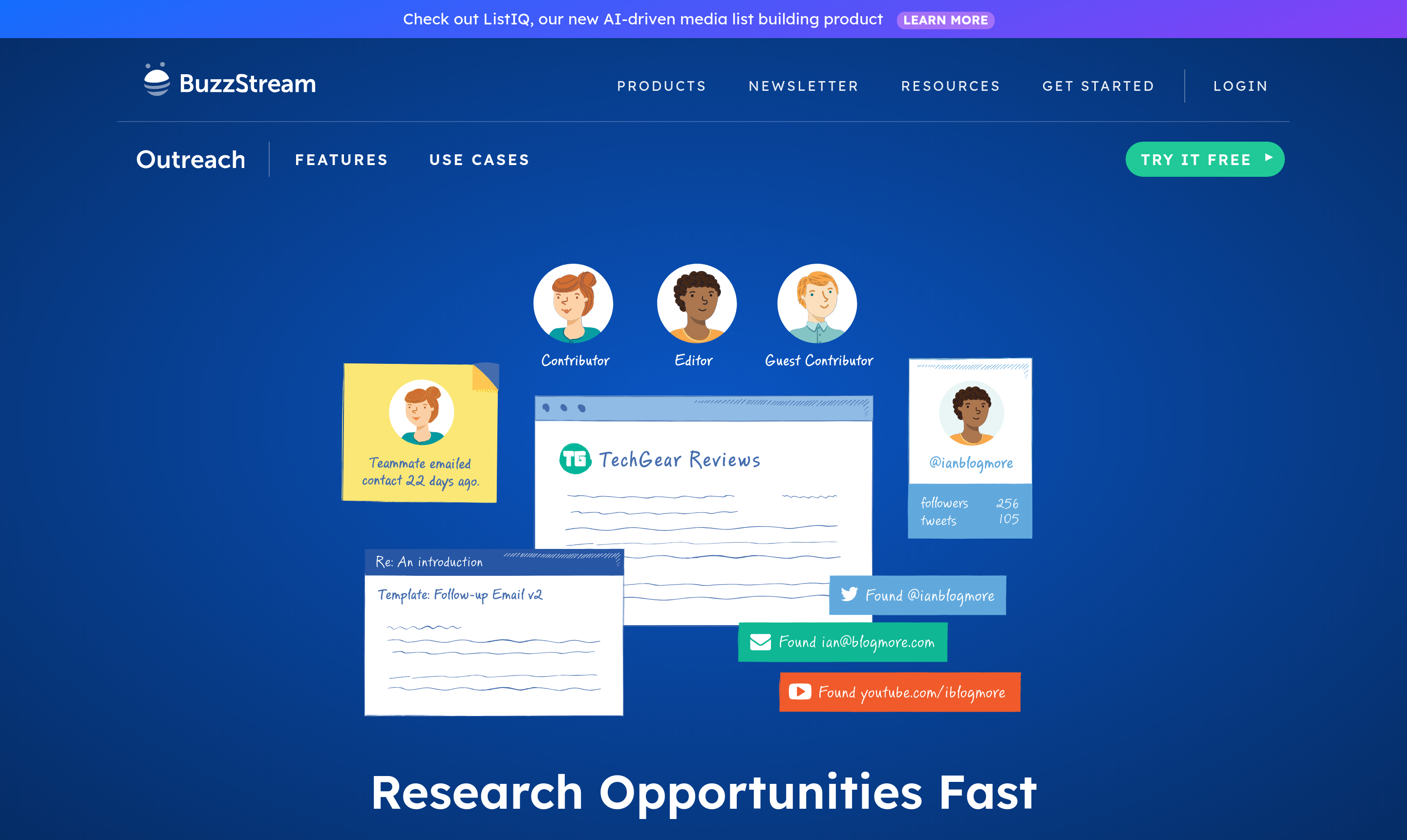
The tier ladder is about seats and contacts more than prospecting: 1, 3 and 6 users with extra seats at $58 and $70, and 500, 25,000 and 100,000 contacts. Bulk send, automated follow-ups and the Ahrefs integration all start at Growth, so the $49 tier is a single-seat manual plan.
It also now ships ListIQ, an AI media-list builder that installs as a Chrome extension and is sold as a separate product from the outreach CRM, at $24, $99, $199 and $399 a month. Budget it as a second line item, not a feature.
What you cannot do at this price: treat Starter as a prospecting plan. Thirty searches and no automated follow-ups is a trial that bills monthly.
AI Backlink Builder, the Respona software in Semrush
The product a lot of people still call the Semrush Link Building Tool is not what you buy now. Respona's software is sold self-serve inside the Semrush App Center as AI Backlink Builder, at $169 a month on Starter, covering 2 email accounts, 10,000 monthly data credits and 30,000 active contacts.
The sourcing is broad: Google Search, Google News, Semrush backlink data for your competitors, and dedicated integrations such as Listen Notes for podcasts. Contacts are found rather than imported, by scraping LinkedIn for the right job title and seniority, then verified by SMTP check in real time.
Personalization is per recipient rather than a merge field: the app analyses the content on each recipient's site and writes to it, metered at 1 credit an email on the cheaper model and 5 on the better one. Sending connects through Gmail and Google Workspace by OAuth, or IMAP and SMTP for anything else.
It scores half a point on relevance because analysing a page to write the email is not the same as scoring the page before it reaches your list, and half on SEO filters because the metric data arrives with the opportunity rather than as a threshold you set.
Respona also sells the done-for-you version at respona.com, priced per placement from $100 for a publisher at DR 20 and up to $500 at DR 60 and up. That is the outsourcing decision, not the tooling one, and it is the same company either way.
What you cannot do at this price: keep it separate from Semrush. It lives in the App Center, on Semrush's credits and its billing.
LinkResearchTools
LinkResearchTools qualifies prospects, but on a different axis from everything else here. It runs a stack of prospecting methods, from broken link and co-citation to competitor and SERP research, and simulates every link for impact against risk. That machinery is the same engine behind its link detox product.
So it answers "will this link hurt me" rather than "does this site write about my subject". A real question, and one most tools cannot answer at all. It is just not the same question, which is why it takes half a point on relevance rather than a full one.
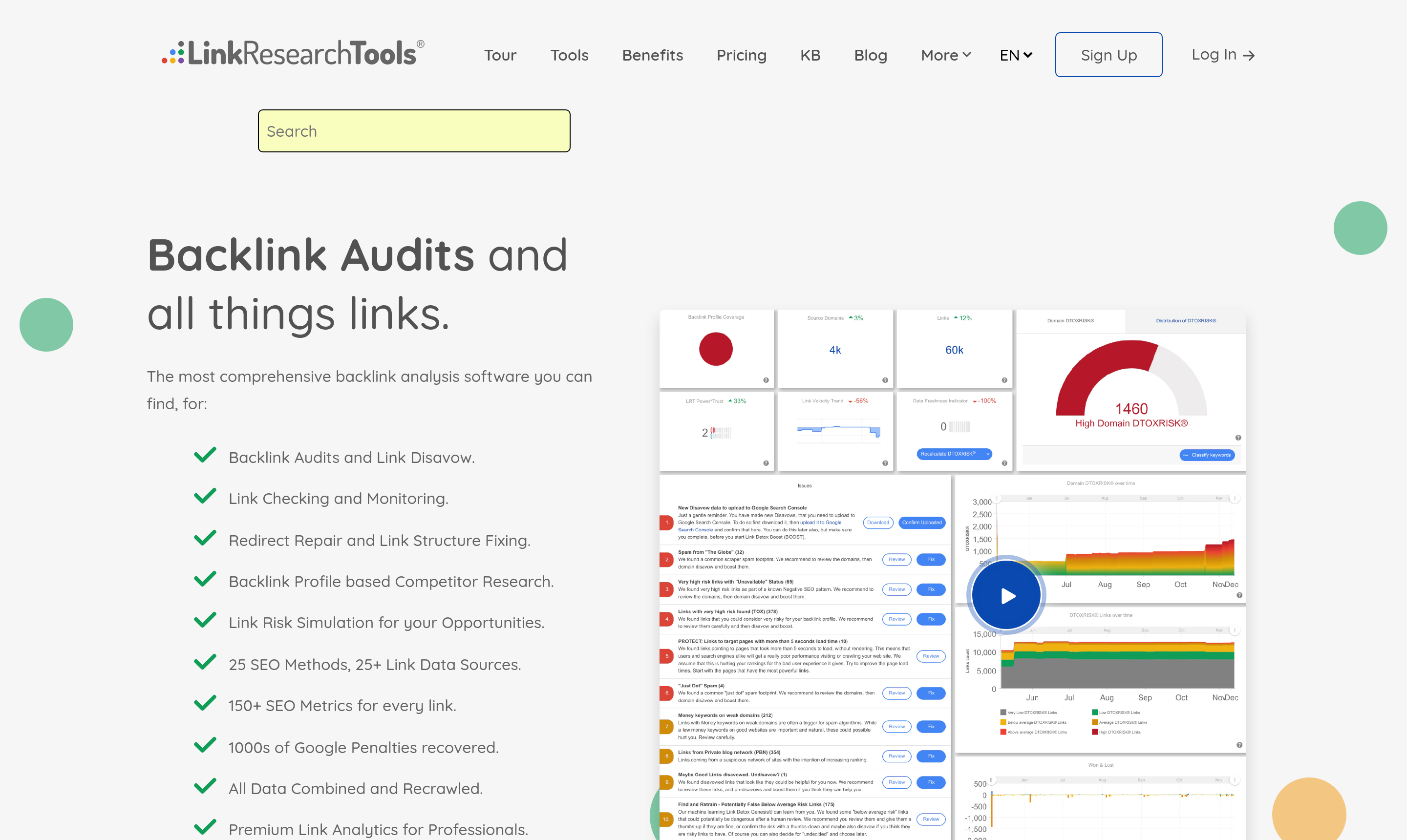
It finds no contacts and sends nothing, so it sits ahead of your outreach tool rather than replacing it. Plans are $599, $999 and $2,499 a month, with quarterly and annual rates and a $17 seven-day trial on the entry tier.
What you cannot do here: run a campaign. This is analysis that feeds one, at a price that assumes you already have the campaign.
Link prospecting data sources that are not prospecting tools
Three well-known names get recommended as link prospecting tools and are something else. None of that makes them bad buys.
Ahrefs is where a lot of prospecting genuinely starts. Content Explorer is sold in Ahrefs' own words to "find thousands of link prospects", and Link Intersect finds the sites linking to your competitors but not to you. The metric filters are the best in the category, and they are part of a full SEO suite you buy for many reasons, not a prospecting line item. It finds no contacts and sends no email, so it is the front half of a workflow, not the workflow. Our AI link building tools roundup covers what has to sit behind it.
Hunter is an email outreach platform that is excellent at contacts and sequences, and it does find leads: Discover, Signals and TechLookup all surface companies. What it has no source for is link prospects specifically. Nothing in it searches a SERP, a backlink profile or a content index, so you bring the domains and it brings the addresses. Sequences stop when someone replies, which is dedupe of a kind, just not the kind that stops you pitching the same site twice. It is metered on monthly searches, with a free tier that caps them low enough to be a tester.
BacklinkCRM is backlink monitoring and partnership management, sold in plans you pick by how many links you track. Its own pitch is to "centralise, safeguard, and monitor every backlink" you have already earned, which is the stage after the link exists. Useful, and not prospecting.
How to choose a link prospecting tool for your budget
Pick by the stage that is actually slow for you, then by how much reading you are willing to do.
- Prospecting is a weekly pipeline you keep re-running: AutoBacklinks, from $79 a month, for the sources and the dedupe.
- You have lists already and need them cleaned: Linkee, from $97 a month, or $80.83 if you prepay a year.
- Listicle placements and AI citations are the goal: ListBrew, from $49 a month, with sending still to come.
- An agency with staff to read lists: Pitchbox, cheapest per search at volume, on a twelve-month commitment that makes the real floor $3,600.
- You are already in Semrush and want Respona's engine: AI Backlink Builder, $169 a month.
- You want the relationship history more than the discovery: BuzzStream, from $174 a month for the tier that automates anything.
- You only need to know if a link is dangerous: LinkResearchTools, from $599 a month.
Whatever you pick, price the metered unit and the contract term rather than the plan. Every tool here meters something, the entry tier is usually where the ratio is worst, and two of them will hold you for a year.
Then build the list by hand once before you buy anything that promises to qualify it for you. Forty prospects, an afternoon, and you will know what a bad row looks like. That is the only way to tell whether the scoring you are paying for agrees with you.
The rest of the chain is covered elsewhere: guest post pitch examples for the asking, the AI link building workflow if the whole pipeline is new, and our link building automation tools scoring for which later stages can be automated at all. To see the qualified-prospect version on your own site, start a trial.
FAQ
What are link prospecting tools?
Link prospecting tools are software that finds pages worth pitching for a backlink and, in some cases, judges whether those pages fit your site before you read them. Of ten products scored here, three score topical relevance automatically and three more judge a prospect on something else, such as link risk, or make you write the qualification prompt yourself. The other things they differ on are where prospects come from, whether SEO metrics can filter the list, whether contacts are found and verified in the same tool, and whether the tool remembers who you already contacted.
What is link prospecting?
Link prospecting is the stage between choosing a page you want links to and sending the first email. It has three parts: finding candidate sites, deciding which of them are worth pitching, and getting a contact for the ones that are. It is the stage that decides your reply rate, which is why a smaller qualified list usually beats a larger raw one.
Are there free link prospecting tools?
Not really, and the free entry points are testers rather than plans. ListBrew gives 50 one-time credits that do not refill, and Hunter's free tier caps how many searches you get each month, so both size a trial rather than a month of work. Anything advertised as a free prospecting tool is usually a query generator or a browser extension that finds pages without qualifying or contacting them, which leaves you the two slowest steps.
What is the best link prospecting tool?
It depends on which stage is slow for you. Two tools cover all six questions: AutoBacklinks from $79 a month, and Linkee from $97. For volume with staff to read the output, Pitchbox is cheapest per search at $0.30 on its $300 tier, with a twelve-month commitment. For listicle placements, ListBrew starts at $49, and for link risk rather than topical fit, LinkResearchTools starts at $599.
How is link prospecting different from link building?
Link prospecting is the first third of link building. Link building covers everything through to the link existing on the page: prospecting, outreach, negotiation, the content you promise, and the follow-up. Prospecting is only the finding and qualifying, and it is the part most teams under-invest in, which is why so much outreach goes to sites that were never going to link to anyone.
About Rachid Idali
Founder & SEO Strategist
Rachid Idali has spent 10 years in SEO, running multi-six-figure SEO and link-building budgets across content, digital PR, and outreach programs. He writes about practical systems for finding relevant prospects, earning links, and turning SEO operations into repeatable pipelines.
More from Rachid Idali